Tyson
With funding through the Mellon Foundation, I created an immersive experience using film and sound in an abandoned WWII bunker in the northern Ozarks. For three months, I followed a group of artist-researchers investigating the site of a WWII bunker at Tyson Field Station in Eureka, MO. Inspired by practices in artistic research, I questioned the site and ongoing human interaction with it through listening and play.
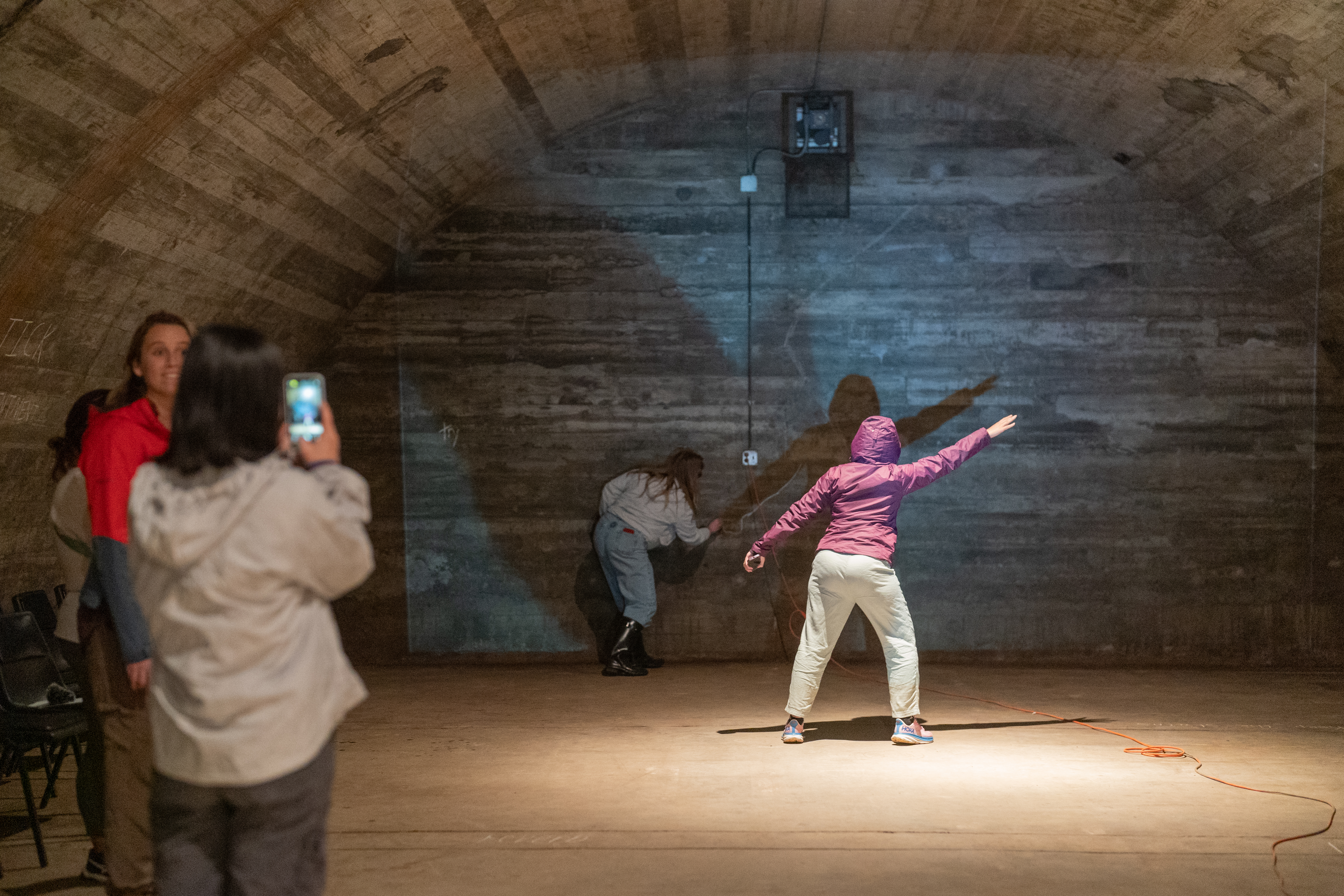
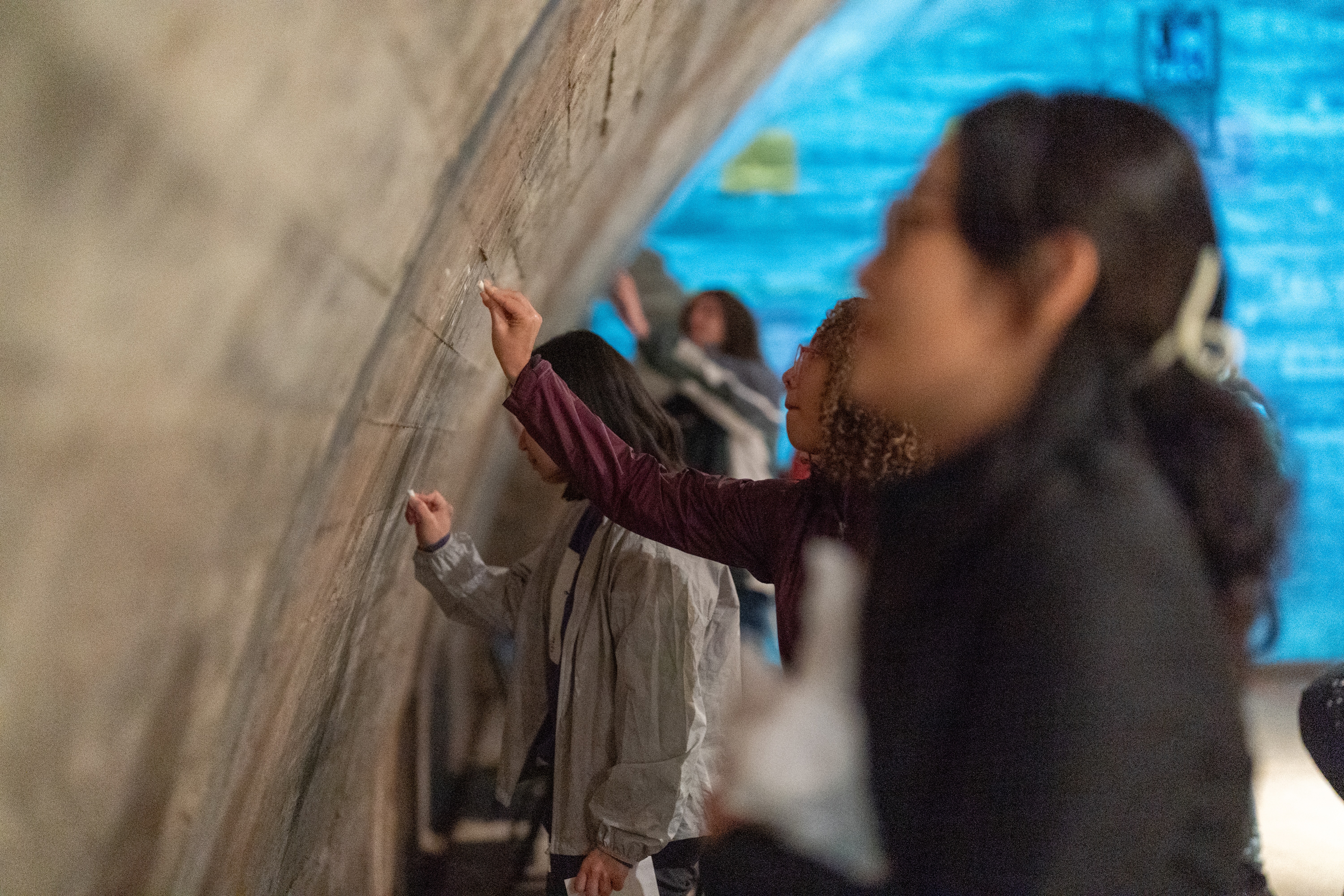
Photos courtesy of Virginia Harold
Artist Statement:
In an exploration of site-based poetry, I fill a WWII storage bunker in the northern Ozarks with provisional symbols of thought—vocalization of words, finger shadow puppetry, and chalk writing. Utilizing a space initially intended for wartime preparations (such as storage of food and arms) solely for a communal art experience acts as a retelling and imagining of alternate possibilities even within the (heavy) constraints of a present physical history. The multiplicity of media approaches to poetry within the space embodies a subset of a site’s ability to saturate thinking and art-making, beyond its physical bounds. The poems, composed previously on-site, off-site in conversation with the site, as well as composed in the moment of exhibit by a collective group, partially capture ongoing thinking and experimentation towards ways of knowing through oral, embodied, and written storytelling. By visibilizing, making heard, and making felt the act of storytelling itself, I highlight a layer of representation in our conception of reality. Sounds, speech acts, shadows, touch, letters become an aesthetic mode of value for the distance between reality and our conception of that reality, including the possibility of shaping it.